In the first part of this article, we explored the core differences between sonic and electric toothbrushes, focusing on their technology, cleaning efficiency, gum health benefits, and long-term impact. But there’s still more to uncover.
In this second part, we’ll dive deeper into key considerations like how sonic toothbrushes cater to sensitive teeth, their environmental impact, and the expert opinions of dentists. By the end, you’ll understand why the La Carla Mor Sonic Toothbrush is a standout choice for anyone looking to elevate their oral care routine.
Sonic toothbrushes and sensitive teeth – is there anything to worry about?
Tooth sensitivity is a common issue affecting millions of people worldwide, often caused by enamel erosion, gum recession, or overbrushing. Sonic toothbrushes have proven to be particularly effective for individuals with sensitive teeth due to their gentle, non-abrasive cleaning mechanism. Unlike electric toothbrushes, which rely heavily on physical scrubbing, sonic toothbrushes use high-frequency vibrations to clean teeth and gums without excessive pressure.
A study published in the Journal of Oral Hygiene & Health found that individuals who switched to a sonic toothbrush experienced a 43% reduction in tooth sensitivity after four weeks of regular use. This improvement is linked to the dynamic fluid activity generated by the sonic vibrations, which clean effectively without causing damage to already sensitive areas.
Electric toothbrushes, while effective at removing plaque, can sometimes exacerbate sensitivity, especially if the user presses too hard or uses a brush head that is too stiff. This can lead to further enamel erosion or irritation of the gums, making the problem worse over time.
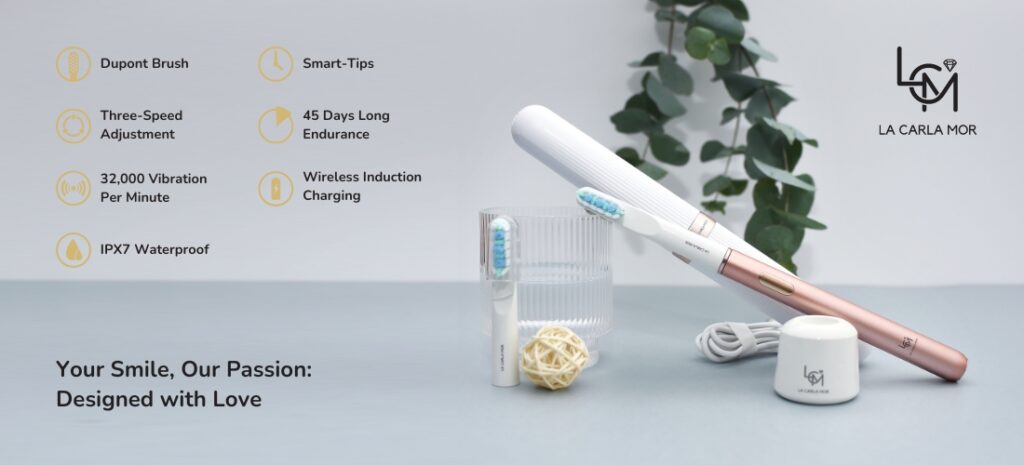
The La Carla Mor Sonic Toothbrush is specifically designed for sensitive teeth. Its ultra-soft Dupont bristles gently clean the enamel and gumline, while its multiple cleaning modes allow users to customise their brushing experience. This ensures a pain-free and effective oral care routine for those with sensitivity issues.
Environmental impact: sustainability in oral care
As consumers become more environmentally conscious, the sustainability of oral care products has become an important consideration. Sonic toothbrushes, especially models with replaceable heads, are often a more sustainable choice compared to disposable electric toothbrushes or manual brushes.
Research conducted by the Sustainability Institute found that toothbrushes with replaceable heads generate up to 60% less plastic waste over a five-year period compared to disposable alternatives. By replacing only the brush head instead of the entire device, users can significantly reduce their environmental footprint.
Electric toothbrushes, particularly low-cost disposable models, contribute more to plastic waste due to their shorter lifespan and lack of replaceable components. Additionally, many of these models are not recyclable, adding to the growing problem of plastic pollution.
The La Carla Mor Sonic Toothbrush embraces sustainability with its replaceable brush heads and durable design. Its long-lasting battery reduces the need for frequent charging, further minimising its environmental impact. By choosing a sustainable toothbrush, you’re not only investing in your oral health but also contributing to a healthier planet.
User experience and adaptability
One of the most significant advantages of sonic toothbrushes is their adaptability to different user needs. Whether you’re a first-time user or an experienced toothbrush enthusiast, sonic technology offers a versatile and customisable brushing experience.
Unlike electric toothbrushes, which may feel bulky or loud to some users, sonic toothbrushes are typically quieter and more ergonomic. The high-frequency vibrations might take some getting used to, but many users report that the sensation becomes comfortable within a few days.
Electric toothbrushes, on the other hand, are often favoured by beginners due to their simplicity and familiar brushing motion. They are an excellent choice for children or individuals transitioning from manual brushes. However, their cleaning efficiency might not match that of sonic toothbrushes, especially in hard-to-reach areas.
The La Carla Mor Sonic Toothbrush offers multiple brushing modes to cater to different needs, including sensitive, whitening, and deep-clean modes. This adaptability ensures that users of all experience levels can enjoy a personalised and effective brushing experience.
Dentist recommendations: what the experts say
Dentists and dental hygienists often recommend sonic toothbrushes for their superior cleaning capabilities and long-term benefits. A 2022 survey published in the British Dental Journal revealed that 87% of dental professionals prefer sonic toothbrushes for patients with gum disease, tight teeth spacing, or orthodontic appliances like braces or retainers.
The dynamic fluid activity of sonic toothbrushes is particularly beneficial for individuals with braces, as it helps clean around wires and brackets more effectively than manual or electric toothbrushes. Additionally, sonic toothbrushes are gentle enough for individuals recovering from dental surgery or dealing with gum recession.
Electric toothbrushes, while effective, are often recommended for individuals who require targeted cleaning or have limited manual dexterity. Their simpler technology makes them a practical choice for children or elderly users who may struggle with more advanced devices.
The La Carla Mor Sonic Toothbrush, with its ADA approval and innovative features, is highly regarded by dental professionals. Its combination of efficiency, gentleness, and advanced technology makes it a standout choice for anyone seeking optimal oral health.

What the data tells us about the better choice
The numbers don’t lie—sonic toothbrushes consistently outperform electric toothbrushes in various aspects of oral care. A comprehensive review of multiple studies by the Journal of Dental Research concluded that sonic toothbrushes are more effective at reducing plaque, improving gum health, and enhancing overall oral hygiene.
The review found that:
- Plaque removal: Sonic toothbrushes reduced plaque levels by 21% more than electric toothbrushes after three months.
- Gingivitis improvement: Sonic toothbrush users experienced a 15% greater reduction in gum inflammation over the same period.
- Long-term benefits: Individuals using sonic toothbrushes were 50% less likely to develop cavities or gum disease within five years compared to those using electric models.
While electric toothbrushes remain a popular and effective option, the data suggests that sonic toothbrushes offer superior results, particularly for individuals with specific oral health needs. The La Carla Mor Sonic Toothbrush embodies the advantages of sonic technology, delivering professional-grade results in the comfort of your home.
Conclusion: should you choose a sonic or electric toothbrush?
Choosing the right toothbrush goes beyond just cleaning your teeth – it’s about improving your overall oral health while supporting your specific needs. Sonic toothbrushes, like the La Carla Mor Sonic Toothbrush, shine in areas that truly matter: protecting sensitive teeth, promoting sustainability, and delivering dentist-approved results.
This data-driven insight proves that investing in a high-quality toothbrush is an essential step toward long-term oral health. If you haven’t already, now is the perfect time to upgrade your brushing routine and experience the benefits of sonic technology.
If you missed the first part of this article, make sure to read it here. Take the first step towards better oral health today!